Original Publish Date/Outlet: June 26, 2026 | Minnesota Star Tribune
Article Link: https://www.startribune.com/2026-special-olympics-usa-games-minnesota-sensory-rooms-kits-schedule-results-athletes/601858762
Thousands of athletes, coaches, families and fans have descended upon the University of Minnesota and the National Sports Center in Blaine this week for the 2026 Special Olympics USA Games.
With many attendees facing physical and cognitive challenges that could prevent them from fully enjoying the Games, companies have teamed up to ensure that isn’t the case.
Fraser, a nonprofit dedicated to autism, mental/behavioral health and disability care, worked with another nonprofit, Joy Collaborative, and Affinity Plus to provide items and places for individuals seeking relief from the noise and commotion that can come with a large-scale event.
Rudy Dominguez, a coach for a volleyball team from Texas, appreciated those resources being available.
“The stimulation is so overwhelming,” Dominquez said. “So having an area where they can go and it’s quieter … it helps overall.”
Sensory-friendly spaces are becoming more prevalent at major sports venues. Target Field opened 12 sensory room suites for fans with autism, Down syndrome or dementia in 2022. The Minnesota Sports Facilities Authority (MSFA), KultureCity, 3M and the Minnesota Vikings created a sensory-inclusive space at U.S. Bank Stadium ahead of the 2019 season.
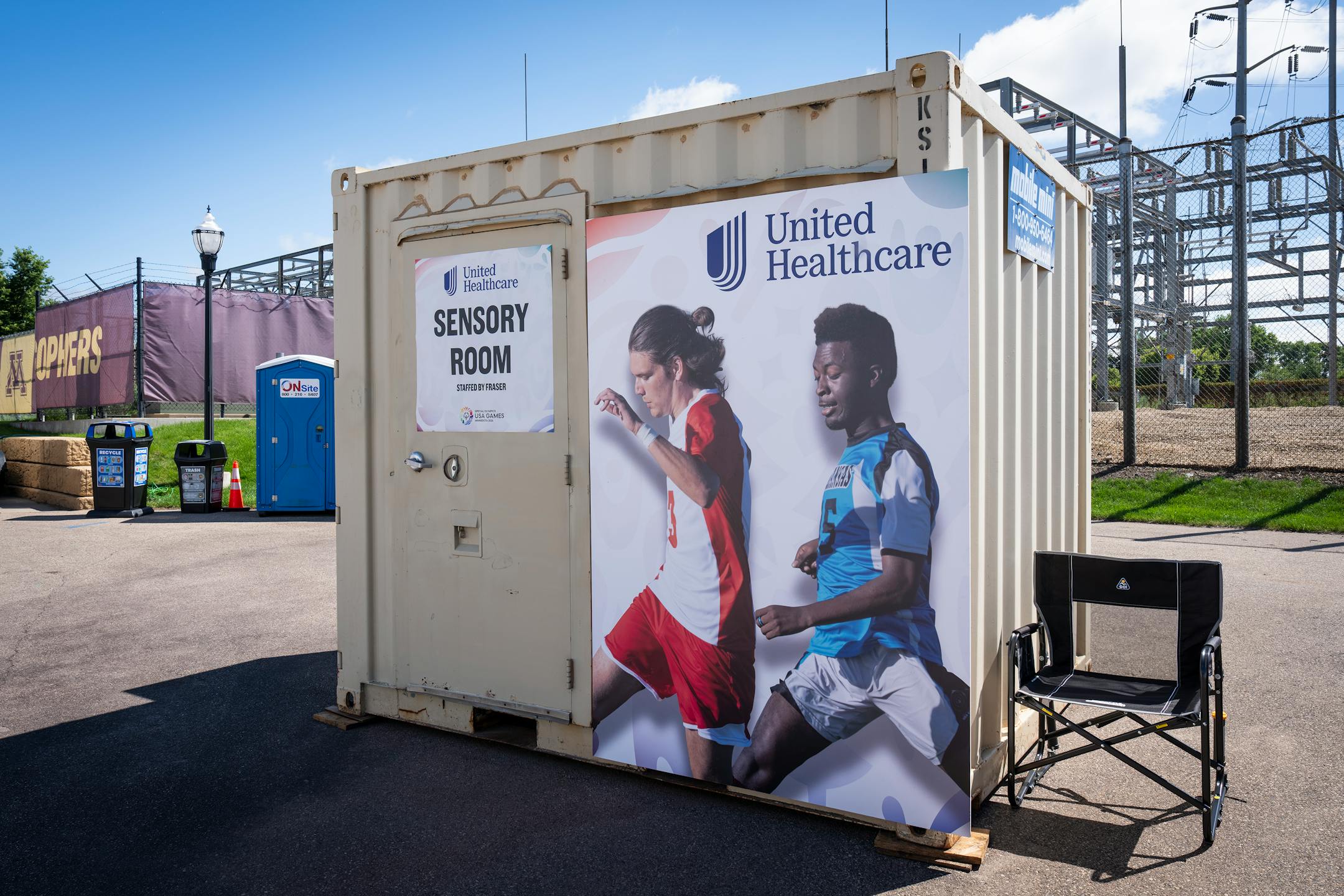
For the Special Olympics USA Games, there are sensory rooms located at both terminals of Minneapolis-St. Paul International Airport, along with one in Blaine. On the University of Minnesota campus, there are sensory spaces located at Athletes Village and the track, as well as smaller spaces near every medical or first-aid tent.
The Joy Zone, the sensory space at the National Sports Center, is mobile and includes a low-stimulation lounge, adaptive seating options, visual relaxation zones and quiet activity nooks.
“They have some sensory rooms even inside the dorms that they have designated as just a quiet break area,” said Gina Brady, Fraser’s Training Program Manager. “They really tried to integrate them across campus since it is such a big area.”
Another component of sensory accessibility is the sensory kits that were distributed throughout the Games. The kits consist of items attendees can carry with them in case they begin to feel overwhelmed.
“They have some noise canceling headphones,” Brady said. “A couple different fidgets, a communication card, some visual tools. So the idea is that, you know, there are sensory rooms available at the event, but if someone needs to be able to take something with them to get back to their event or take back to the dorms, they have this kit as kind of a mobile option.”
Brady said Fraser was involved for about 18 months preparing the rooms and kits, which were available at the Games and the airport.
“We had monthly meetings, and a lot of our efforts were focused on MSP Airport,” she said. “So the days that the athletes were arriving to the airport, as well as leaving the airport after the event, and making sure that’s a really smooth and supportive process.”
The feedback about the sensory rooms and kits have been positive so far, especially during the Opening Ceremony on Saturday, Brady said.
“People were really excited to get the Games started, and we had quite a few people who benefited from using a sensory room there,” she added. “So that was a great thing that they had available, and was well utilized. So far, throughout the first couple of days, we’ve had a few uses of the sensory rooms, and we’ve given out quite a few sensory kits. So that, to us, lets us know that it was all worth it to have these things available.”
Some attendees said they were unaware of the sensory spaces, but they noted the prevalence of elevators and ramps at the University of Minnesota’s Recreation Center for guests with physical impairments.
Athlete Clark Rae said he used the sensory spaces while at the pre-party for Minnesota athletes ahead of the Games and noticed the spaces in Blaine.
“I was able to watch something on my MP4 player,” Rae said.
Rae, who’s used sensory spaces at Target Field before, said he hopes more venues can incorporate the spaces.
Brady said she believes the sensory accessibility at this year’s USA Games in Minnesota is likely to leave a legacy.
“This is something that Special Olympics is looking to incorporate into all future events, too,” Brady said. “So it’s exciting to get to be a part of setting that new standard for them so that future events in other states can replicate this and provide that same level of sensory support.”